By GSP Asphalt Paving Editorial Team · Updated October 26, 2026 · 7 min read
Asphalt driveway maintenance in Middletown, New Jersey requires seasonal sealcoating and prompt crack repair to prevent freeze-thaw damage. GSP Asphalt Paving, a family-owned company operating since 1962, recommends commercial-grade sealcoating every two to three years. Professional patching addresses potholes before they expand into costly structural failures.
Why does Middletown weather damage asphalt?
Middletown's position near the Jersey Shore creates three specific paving challenges. Sandy soil shifts beneath pavement, a high water table saturates low-lying areas, and salt-air freeze-thaw cycles punish poorly built asphalt. These conditions work together to crack, heave, and undermine driveways faster than many inland locations experience.
What makes Middletown soil different from inland New Jersey?
Sandy soil that shifts under freeze-thaw pressure destabilizes the base layer beneath asphalt. A high water table in low-lying neighborhoods keeps that base saturated through winter. When water freezes, it expands and lifts the pavement. When it thaws, the ground settles unevenly. This repeated movement creates cracks, sunken sections, and broken edges that worsen with every cycle.
How does salt air accelerate asphalt deterioration?
Salt residue settles into surface pores and accelerates oxidation of the asphalt binder. The binder becomes brittle and loses flexibility, and hairline cracks widen rapidly during temperature swings. Professional sealcoating protects the surface from this salt penetration and slows binder breakdown.
GSP Asphalt Paving has operated out of Ocean County since 1962 and serves Middletown and the surrounding Monmouth County communities. The company builds bases for shifting sandy soil, grades for real drainage, and uses hot-mix asphalt suited to local conditions rather than a one-size-fits-all specification.
What drainage mistakes cause premature asphalt failure?
Grading must account for where water will go, including low spots, garage entrances, and adjoining surfaces. Adding asphalt over a drainage or foundation problem does not correct the cause. Water trapped beneath pavement weakens the base and triggers potholes within a few seasons. Proper grading directs runoff away from the driveway before installation begins.
What tools do you need for driveway care?
Driveway care in Middletown requires a small set of tools matched to the specific damage. The right equipment depends on whether the pavement shows a pothole, a sunken section, a broken edge, or a failed seam. Good maintenance starts with an honest assessment: identify the exact problem before buying any supplies.
What should homeowners check before gathering tools?
The surrounding pavement matters as much as the visible hole. Full-depth patching removes compromised asphalt and addresses weak support underneath before hot mix is placed and compacted — that job needs excavation tools, a tamper, and hot-mix asphalt. A shallower repair may suit isolated surface deterioration over a sound base and needs only a crack filler, a trowel, and a stiff broom.
Which tools match which repair type?
- Full-depth patching: a shovel, a hand tamper or plate compactor, and hot-mix asphalt.
- Shallow surface repair: a crack filler, a trowel, and a stiff broom for cleaning.
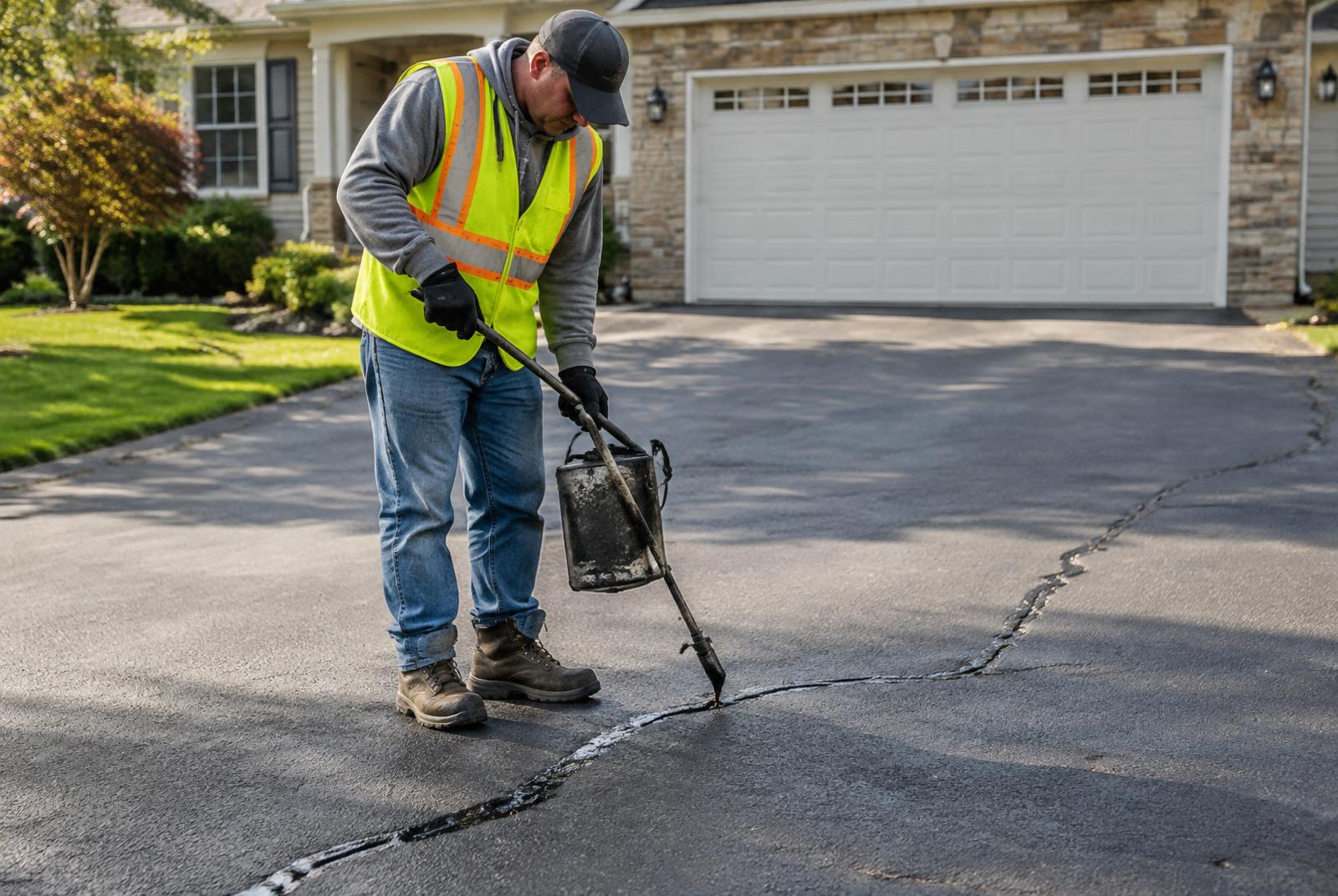
- Crack treatment: a pourable crack sealer with a pour pot or caulking gun.
Crack treatment addresses a different condition. It cannot rebuild a collapsed section or correct standing water. GSP Asphalt Paving helps Middletown property owners match the repair method to the actual pavement failure.
How often should you sealcoat near the Jersey Shore?
Sealcoating on a two-to-three-year cycle suits Middletown's coastal conditions, which accelerate asphalt deterioration. Skipping a cycle exposes driveways to salt-air oxidation and freeze-thaw damage that can shorten asphalt life by years.
GSP Asphalt Paving applies commercial-grade sealer over hot-mix asphalt surfaces, forming a protective barrier against the elements. Sealcoating is offered as a separate service for existing pavement, so property owners can schedule maintenance without committing to a full replacement. A maintained driveway preserves curb appeal while preventing surface raveling that leads to costly base repairs.
What signs indicate a driveway needs sealcoating sooner?
Faded color signals oxidation has stripped the asphalt binder. Exposed surface aggregate creates a rough texture that traps moisture. Small hairline cracks need attention before water reaches the base, whereas interconnected alligator cracking indicates underlying subgrade failure. Any of these conditions justify moving the sealcoat timeline forward, even if the last application was within two years.
Does sealcoating protect against Middletown weather patterns?
Yes. Sealcoating waterproofs the surface, helping block standing water from seeping into the subbase in low-lying neighborhoods with sandy soil and a high water table. During winter freeze-thaw cycles, sealed pavement better resists the expansion forces that crack unprotected asphalt, and a fresh layer interrupts salt-air oxidation of the binder.
Follow this maintenance sequence:
- Inspect the entire driveway surface each spring for fading, aggregate exposure, or crack formation.
- Schedule sealcoating every 24 to 36 months, adjusting earlier if inspection reveals deterioration.
- Verify the contractor uses commercial-grade sealer rather than diluted, low-solids products.
- Keep traffic off the fresh application until the sealer has fully cured.
GSP Asphalt Paving brings over 60 years of experience and more than 4,500 completed jobs to every Middletown project, with third-generation expertise matched to the demands of the coastal climate.
What is the best way to patch potholes?
The best pothole repair method removes compromised asphalt and addresses weak support underneath. Full-depth patching restores structural integrity rather than hiding surface damage. A patch that ignores subsurface failure can crumble within a single winter.
How do professionals prepare a pothole for patching?
Preparation starts below the finished surface. Existing pavement and exposed base are assessed for weak areas. Removal, stone placement, and compaction are included where needed, and grading must direct water away from the repair zone before any new asphalt is placed.
What steps produce a lasting pothole repair?
- Mark the repair boundary at least 12 inches beyond the visible damage into sound pavement.
- Saw-cut the perimeter to create clean, vertical edges that lock the new asphalt in place.
- Excavate failed material down to stable subgrade, removing all loose aggregate and debris.
- Compact the exposed base with a vibratory plate compactor to eliminate soft spots.
- Apply a tack coat to the vertical edges and bottom to bond old pavement to new.
- Place hot-mix asphalt in lifts, compacting each layer before adding the next.
- Seal the patch perimeter after final compaction to block water intrusion.
GSP Asphalt Paving's asphalt patching services follow this full-depth protocol. A home driveway needs careful transitions at the garage and street; a commercial lot also requires load-rated compaction for heavy vehicle traffic. Every job is personally supervised by the owner, and transparent, itemized pricing means homeowners know exactly what the excavation scope includes before work begins.
When should you call a professional contractor?
A driveway problem crosses into professional territory the moment structural damage becomes visible. Surface cracks wider than a quarter inch signal that water has compromised the base layer — a failure no DIY sealant corrects. Potholes and alligator cracking indicate the subgrade itself is failing, and waiting through another freeze-thaw cycle can turn a patchable section into a full-depth replacement.
When does a crack become a structural threat?
A crack becomes structural when it measures wider than a quarter inch or when multiple cracks connect into a grid pattern. GSP Asphalt Paving's residential driveway paving service includes a free at-home consultation that identifies whether an overlay or full replacement makes sense, followed by a written proposal with a firm price.
What signs indicate the base layer is compromised?
Standing water that remains 24 hours after rainfall points to base-layer failure. Sunken sections, broken edges along the driveway perimeter, and a spongy feel underfoot also signal deteriorated support. GSP Asphalt Paving's licensed and insured crews deliver clean edges, consistent thickness, and a properly tied-in apron at the street, with clear communication from consultation through completion.
Conclusion
Middletown homeowners who follow these maintenance steps protect their investment against coastal weather and sandy soil. Schedule a professional inspection when cracks widen beyond a quarter inch or standing water lingers after rain. Addressing structural problems early prevents a full replacement and keeps your driveway functional through New Jersey winters.